What life skills development is
Life skills development is a Capacity Building support funded by the NDIS. It funds training and skill-building to help you manage daily life more independently.
It is not a support worker doing tasks for you. It is training, learning to do things yourself, with support, so you need less assistance over time.
Life skills development is for participants who want to build practical independence in areas like cooking, budgeting, home management, communication, or daily routines. The goal is not to create ongoing reliance on a worker. The goal is to build your capacity so you can manage more on your own.
What we help you build
SA Holistic Care is registered under NDIS registration group 0117, Development of Daily Living and Life Skills.
We provide practical, hands-on training in:
Home and daily living
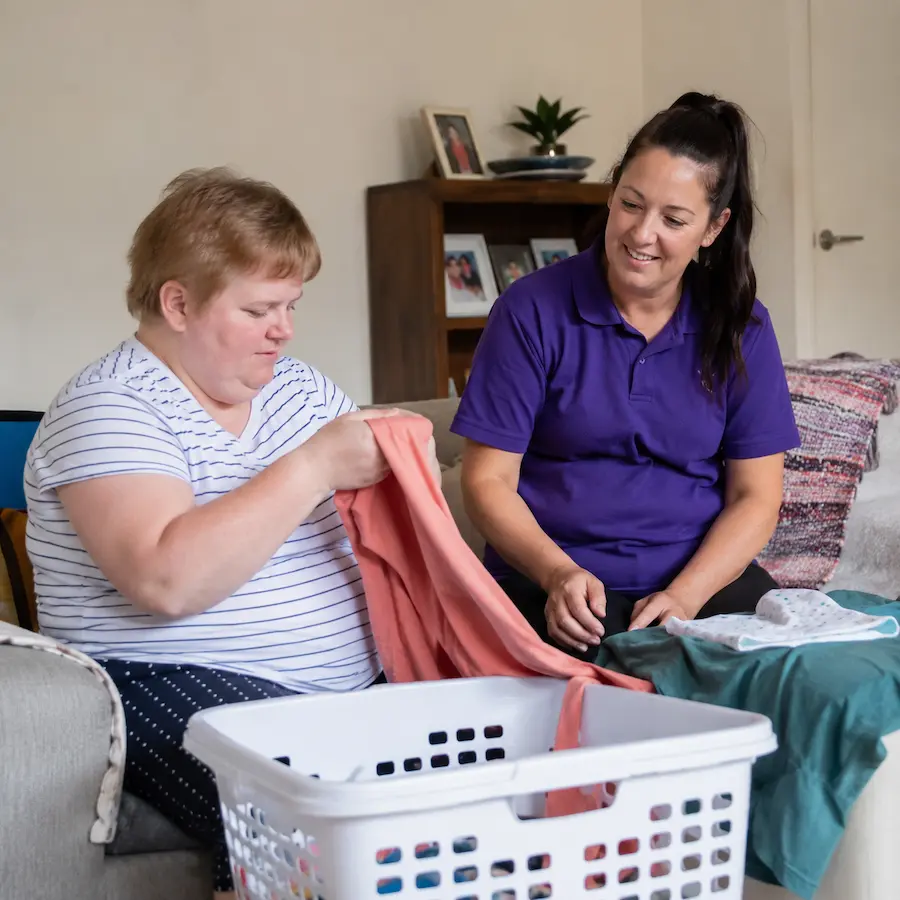
Cooking, meal planning, kitchen safety, grocery shopping, cleaning, laundry, and home organisation. Skills for managing your household safely and independently.
Money and budgeting
Managing a personal budget, using online banking, reading bank statements, tracking expenses, and understanding your financial entitlements. Practical financial skills for everyday life.
Personal care and health routines
Building consistent routines for personal hygiene, medication management, and self-care. Developing habits that support your health and wellbeing.
Communication and social skills
Practical communication skills for everyday situations, with family, support workers, service providers, and in the community. Confidence in conversations, asking for help, and advocating for yourself.
Time management and planning
Using calendars, checklists, and routines to organise your day, manage appointments, and stay on top of tasks.
Transport and community navigation
Learning to use public transport, navigate your local community, and access services independently.
Problem-solving and decision-making
Building the skills to identify options, weigh up decisions, and respond to everyday challenges without needing to rely on others.
What life skills development is not
Life skills development is not the same as household task support (0120).
Household task support funds a worker to help you complete tasks. Life skills development funds training so you can learn to complete tasks yourself.
Both can appear in your NDIS plan at the same time, household support for what you need help with now, and life skills training for what you are working towards doing independently.
Is this support right for you?
Life skills development may be right for you if:
If you are not sure whether your plan includes this funding, your support coordinator or LAC can confirm. Life skills development funding sits under Category 15, Improved Daily Living.
How to get started
Our process is designed to make it easy for you to start with us
A conversation about your needs
Call us, submit an enquiry , or book a free consultation. Tell us your current situation, your routine, and what's most important to get right.
We learn about your goals
We talk through what you want to be able to do independently, what is getting in the way, and what skills you are starting with. Training is built around where you are now and where you want to get to.
We build your training plan
We develop an individualised training plan with clear goals and practical steps. Sessions are structured, but delivered in a way that fits your routine and learning style.
Training begins
Sessions are delivered one-on-one, at a time and place that works for you, your home, your community, or both. Same worker, consistent approach, every session.
Progress review
We track your progress and review your plan regularly. As skills develop, training adapts. The goal is always greater independence, not ongoing dependence on the programme.