Life Stage Transition Support

Coordinated transition mentoring providing guidance and emotional support for milestones like finishing school or moving homes.

What life stage transition support is

Life stage transition support is a Capacity Building support funded by the NDIS. It helps you plan for and manage significant changes in your life, and build the skills and confidence to navigate those changes more independently.

It is not ongoing daily support. It is structured, goal-focused assistance during periods of change, when the stakes are high, multiple things are moving at once, and getting it right matters.

Transitions are some of the most complex periods in a participant's life. Without the right support in place, gaps appear, services fall through, and the change becomes harder than it needs to be. Transition support exists to prevent that.

What life stage transitions support covers

SA Holistic Care is registered under NDIS registration group 0106, Assistance in Coordinating or Managing Life Stages, Transitions and Supports. We support participants through:

Leaving school and moving into adult life

The transition from school to adulthood involves multiple changes at once, supports, routines, relationships, and expectations all shift at the same time. We help participants and families plan ahead, coordinate the right supports, and build the skills needed for adult life before the change happens.

Moving into independent or supported living

Moving out of the family home, into independent living, a SIL arrangement, or shared housing, requires practical preparation and coordination across multiple services. We help with planning the move, setting up supports, and building the daily living skills needed to manage independently.

Entering employment or further education

Starting a job, a traineeship, or further study is a significant transition. We help participants prepare, building routines, navigating workplace or study environments, and coordinating the supports needed to make the transition sustainable.

Transitioning between services or living arrangements

When existing supports end, providers change, or living arrangements shift, continuity of care is at risk. We coordinate the transition so nothing falls through the gap.

Managing major life events

Significant personal changes, a health change, a family change, a change in housing, can require rapid coordination of supports. We help participants and families navigate those changes with a clear plan and the right people involved.

What transition support includes

Depending on your situation and goals, transition support may include:

  • Transition planning, mapping out the steps, timelines, and supports needed for a specific life change
  • Service coordination, connecting you with the right providers and making sure everyone involved understands their role
  • Skill development, building the practical skills you need for the next stage, daily living, budgeting, communication, self-advocacy
  • Mentoring and peer support, structured guidance from someone who understands what the transition involves
  • Self-advocacy training, understanding your NDIS plan, your rights, and how to speak up for what you need
  • Connecting with community, identifying and linking to community groups, services, and networks that support your goals at the next stage
  • Is this support right for you?

    Life stage transition support may be right for you if:

  • You are approaching a significant life change and need help planning and preparing for it
  • Multiple services and supports need to be coordinated and you are not sure how to manage that
  • You are moving between stages of life, school to adulthood, home to independent living, unemployment to work, and want structured support to make the change go well
  • Your NDIS plan includes funding under Capacity Building, Increased Social and Community Participation (Category 09), registration group 0106
  • If you are not sure whether your plan includes this funding, your support coordinator or LAC can confirm.

    How to get started

    Our process is designed to make it easy for you to start with us

    1

    A conversation about your needs

    Call us, submit an enquiry , or book a free consultation. Tell us your current situation, your routine, and what's most important to get right.


    2

    We understand your situation

    We talk through the transition you are facing, what is changing, what is already in place, what is missing, and what the risks are. We look at your NDIS plan and identify what funding is available to support the transition.


    3

    We build a transition plan

    We develop a clear, practical plan for the transition, the steps, the timeline, the services involved, and the skills to be developed. The plan is specific to your situation, not a template.


    4

    We coordinate and support

    We work with you and the services involved to make the transition happen. Where skills need to be built before or during the change, we deliver that training as part of the process.


    5

    Transition complete, handover and review

    At the end of the transition, we review what is in place and make sure supports are stable before stepping back. The goal is a successful handover to your next stage, not ongoing dependence on transition support.

    FAQ's

    Common questions

    Most frequently asked questions about our Life Stage Transitions service

    What is the difference between life stage transition support and support coordination?

    Standard support coordination (also under registration group 0106) focuses on helping you understand and implement your NDIS plan on an ongoing basis. Life stage transition support is more targeted, it focuses on a specific transition, building toward a defined outcome, and stepping back once the transition is complete. Both sit under 0106. Your support coordinator or LAC can clarify which is funded in your plan.

    What is the difference between life stage transition support and life skills development (0117)?

    Life skills development (0117) funds structured training to build specific practical skills, cooking, budgeting, transport. Life stage transition support (0106) is broader, it encompasses planning, coordination, skill-building, and mentoring across a major life change. In practice, the two often work together: transition support coordinates the change while life skills training builds the capacity needed for it.

    Does my NDIS plan need to specifically include this funding?

    Yes. Life stage transition support is funded under Capacity Building — Increased Social and Community Participation (Category 09), registration group 0106. If it is not in your current plan, speak with your support coordinator or LAC about requesting it, particularly if you are approaching a significant life change.

    How long does transition support last?

    It depends on the complexity of the transition. Some transitions, moving into a new living arrangement, may need a few months of focused support. Others, such as the school-to-adulthood transition, may take longer. We will give you a realistic timeframe based on your specific situation, not an open-ended commitment.

    Can transition support be provided if I already have a support coordinator?

    Yes. If you have an existing support coordinator, we work alongside them. Transition support under 0106 can complement support coordination rather than replace it, particularly where a specific, complex transition requires dedicated planning and skill-building focus.

    Can family members be involved in the transition planning?

    Yes. Where the participant chooses to involve family or carers, we include them in the planning process. Transitions that affect the whole household, moving out of the family home, for example, benefit from everyone involved being part of the plan.

    What if the transition does not go as planned?

    Life transitions rarely go exactly to plan. We review and adjust throughout the process. If circumstances change, we adapt the plan. The goal is a successful outcome for the participant, not rigid adherence to a document.

    Ready to book or just want to ask some questions?

    Call our team on 0430 505 394, or submit an enquiry and we'll respond within 4 business hours.

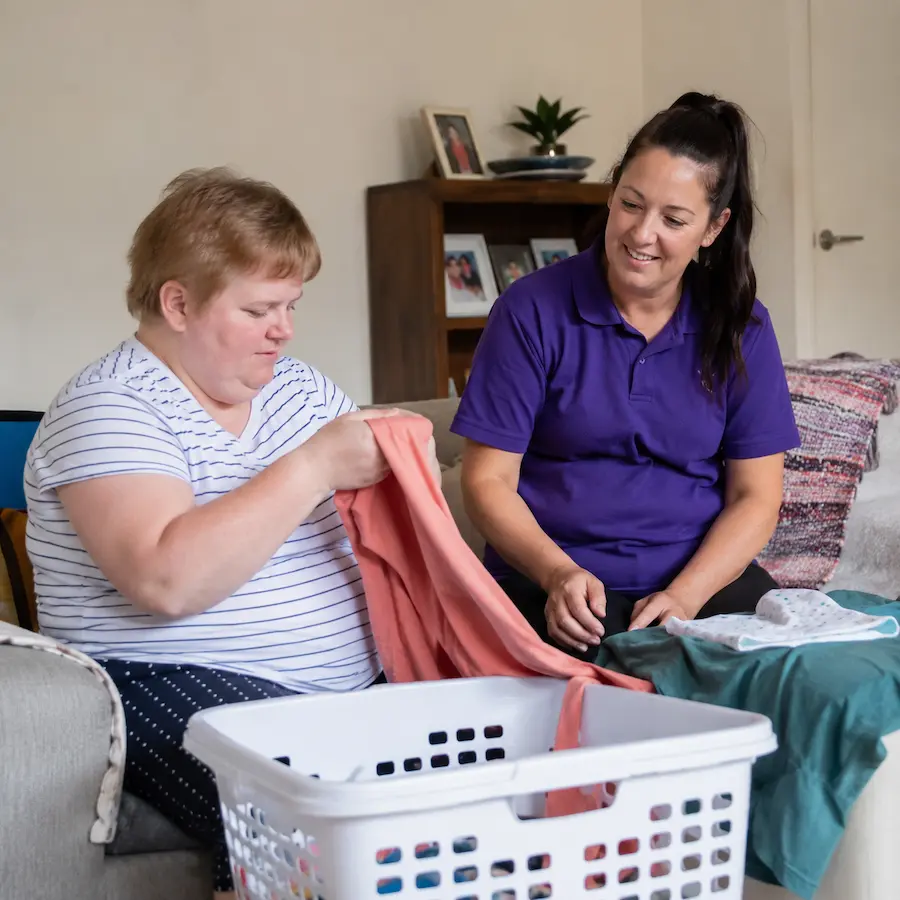
    SIL participant folding her clothes and support worker is guidig her