Positive Behaviour Support

Evidence-based, compassionate clinical strategies focused on improving quality of life and reducing restrictive practices safely.

What positive behaviour support is

Positive behaviour support (PBS) is a therapeutic support funded by the NDIS.

It is not punishment or control. It is not about stopping behaviour for the sake of stopping it.

PBS looks at why a behaviour is happening, the unmet needs, communication barriers, or environmental factors behind it, and builds strategies to address those causes. The goal is to improve quality of life and reduce or eliminate the need for restrictive practices.

PBS is for participants whose behaviour creates difficulties for themselves or the people who support them. This includes behaviour that causes distress, poses a risk of harm, or affects the participant's ability to take part in daily life.

How we support you

SA Holistic Care is registered under NDIS registration group 0110, Specialist Positive Behaviour Support.

Our behaviour support practitioners are considered suitable by the NDIS Commission to develop behaviour support plans, including plans that involve regulated restrictive practices. We provide:

Functional behaviour assessment

A thorough assessment of the participant's strengths, needs, environment, and the factors that trigger and maintain behaviour of concern.

Behaviour support plan development

An individualised plan built around the participant's goals, developed with the participant, their family, and their support team.

Restrictive practice reduction

Where restrictive practices are in place, we work to reduce and eliminate them over time.

Skill building

Identifying and building skills that replace behaviours of concern, including communication, self-regulation, and daily living skills.

Environmental strategies

Changes to routines, environments, and interactions that reduce triggers and support positive behaviour.

Carer and support worker training

Practical training for the people who implement the plan day to day.

Plan monitoring and review

Ongoing data collection and plan review to track progress and adjust strategies as needed.

Behaviours of concern we support

Behaviours of concern are behaviours that cause distress or create risks for the participant or others. They may include:

  • Self-injurious behaviour
  • Aggression toward others
  • Property destruction
  • Verbal outbursts or emotional dysregulation
  • Withdrawal or refusal of support
  • Behaviour driven by communication difficulties or sensory needs
  • Behaviours of concern are not personal. They are signals. Our job is to understand what the signal means.

    What a behaviour support plan is

    A behaviour support plan is the written document that brings the assessment and strategies together.

    It is not a generic template. It is specific to the participant, their history, their triggers, their strengths, and their goals. A behaviour support plan includes:

  • The results of the functional behaviour assessment
  • Proactive strategies to reduce triggers and build skills
  • Reactive strategies for safe responses when behaviours occur
  • Details of any regulated restrictive practices, where applicable
  • A plan to reduce and eventually eliminate restrictive practices
  • Responsibilities for everyone involved in implementing the plan
  • All implementing providers, the workers and services who carry out the plan, are required to follow it. We work with your support network to make sure everyone understands their role.

    Is this support right for you?

    Positive behaviour support may be right for you if:

  • You have behaviours that are causing distress or difficulty for you or the people who support you
  • You or your support team want to understand why a behaviour is happening, not just manage it
  • You have restrictive practices in place and want a plan to reduce them
  • Your NDIS plan includes funding under Improved Relationships or Capacity Building, Relationships
  • If you are not sure whether your plan includes PBS funding, your support coordinator or LAC can confirm this. PBS funding sits under the Improved Relationships support category.

    Our clinical standards

    Here is what SA Holistic Care does to make sure your behaviour support is safe, ethical, and effective:

  • Registered under NDIS registration group 0110, Specialist Positive Behaviour Support
  • All behaviour support practitioners considered suitable by the NDIS Commission
  • Behaviour support plans developed in line with NDIS Practice Standards and the Positive Behaviour Support Capability Framework
  • Functional behaviour assessment completed before any plan is developed
  • Plans developed with the participant, their family, and their support network, not written in isolation
  • Regulated restrictive practices documented, authorised, and reported in line with NDIS rules
  • All implementing providers briefed and trained on the plan before it is put in place
  • Plans reviewed regularly and updated as the participant's needs change
  • Incident reporting and escalation protocols in place
  • How to get started

    Our process is designed to make it easy for you to start with us

    1

    Contact us or book a free consultation

    Call us, submit an enquiry , or book a free consultation. Tell us your current situation, your routine, and what's most important to get right.


    2

    Functional behaviour assessment

    Our behaviour support practitioner conducts a thorough assessment. This includes gathering information about the participant's history, environment, triggers, and strengths, from the participant, family, and support team.


    3

    Behaviour support plan development

    We develop an individualised behaviour support plan with the participant and their support network. The plan is specific, practical, and built around the participant's goals.


    4

    Plan implementation

    We brief and train all implementing providers, support workers, family members, and other services involved in the participant's care, so the plan is carried out consistently.


    5

    Monitoring and review

    We collect data, track progress, and review the plan regularly. Where strategies are working, we build on them. Where restrictive practices are in place, we work toward removing them.

    FAQ's

    Common questions

    Most frequently asked questions about our Specialist Positive Behaviour Support service

    What is the difference between positive behaviour support and standard psychology or counselling?

    PBS is specifically focused on understanding and changing behaviour that causes difficulty or harm. It is not talk therapy. It involves assessment, a written behaviour support plan, and strategies that are implemented by the participant's entire support network, not just during a session with a practitioner.

    Does my NDIS plan need to include PBS funding specifically?

    Yes. PBS is funded under the Improved Relationships support category. If your plan does not currently include this funding, speak with your support coordinator or LAC about requesting it at your next plan review.

    What are restrictive practices and does PBS involve them?

    Restrictive practices are strategies that limit a person's freedom of movement or actions, such as environmental restraint, physical restraint, or medication used to change behaviour. PBS does not introduce restrictive practices. Where they are already in use, PBS is required by the NDIS to have a plan in place to reduce and eventually eliminate them.

    Who implements the behaviour support plan?

    The plan is implemented by everyone involved in the participant's day-to-day support, support workers, family members, carers, and other providers. Our practitioner develops the plan and trains the people who carry it out. Consistent implementation across the support network is what makes PBS effective.

    How long does positive behaviour support take?

    PBS is not a short-term intervention. Behaviour change takes time, and plans are reviewed and updated as progress is made. The timeline depends on the complexity of the participant's needs and the behaviours being addressed. We will give you a realistic picture of what to expect after the initial assessment.

    Can PBS be delivered alongside other NDIS supports?

    Yes. PBS works alongside other supports, including occupational therapy, speech pathology, community nursing, and daily personal activities. Where relevant, we coordinate with other providers to make sure strategies are consistent across the participant's support network.

    What if the participant's behaviour changes or escalates during the process?

    Your behaviour support practitioner is available to respond to significant changes. If behaviour escalates or the situation changes, we review and update the plan, we do not wait for the next scheduled review.

    Ready to book or just want to ask some questions?

    Call our team on 0430 505 394, or submit an enquiry and we'll respond within 4 business hours.

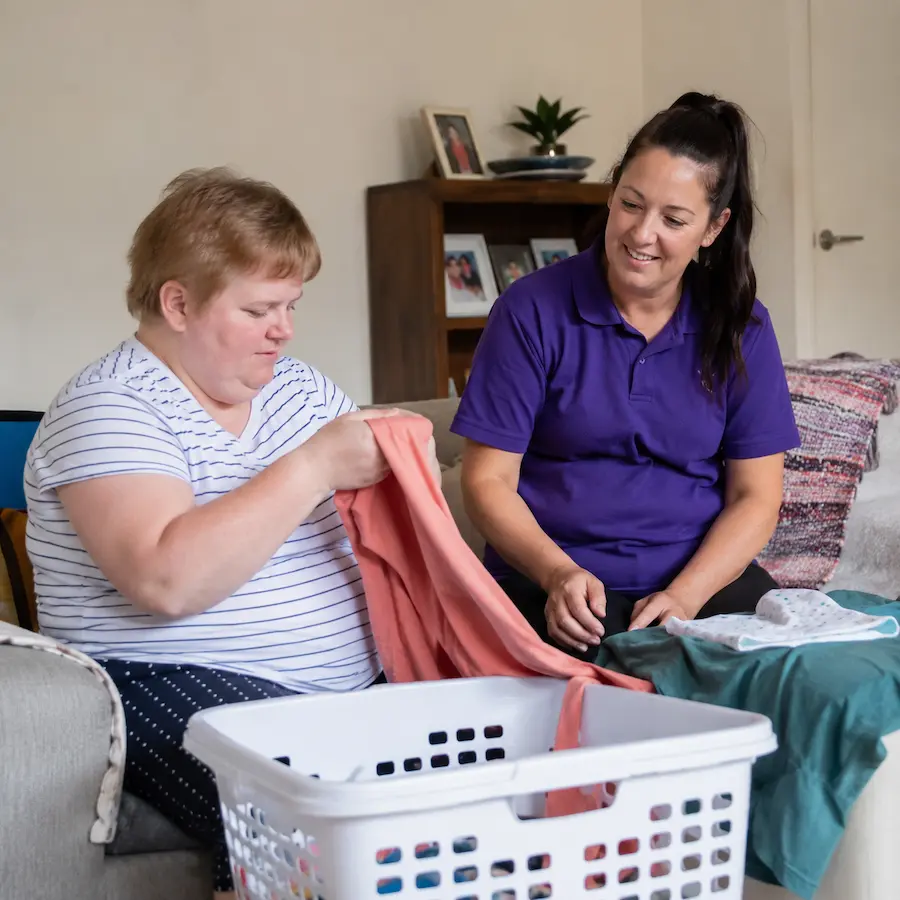
    SIL participant folding her clothes and support worker is guidig her